on team formation

In a meeting today a friend (quietly) observed that opening a process to a wider audience very fast may compromise the very process that interests the intended audience. I replied back with the thesis that:

“Whenever data increases, quality drops (for any quality metric)”

I first heard that thesis 15+ years back in a meeting about data warehouse quality. Usually when few people get together for a certain task it goes like this:

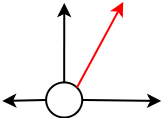
Small team, with people working towards similar goals

Increase the number of participants and you get something like this:

More people join the party, and things get interesting

Add a political twist and some power-play (personal or between organizations) and you get this:

Politics and power-plays set the project's final course (do nothing)

This is to be expected. David Alan Grier in “The Dictator and the Web Design” (IEEE/Computer, May 2009) notes:

“Traditional management theories identify such fights as the second part of a four-stage development process for small groups, the forming-storming-norming-performing steps that psychologist Bruce Tuckman identified in the 1960s. “Group members become hostile toward one another as a means of expressing their individuality and resisting the formation of group structure,” Tuckman claimed.

In Tuckman”s model, committee members must go through a period in which they express their objections to the collaboration in emotional terms (the storming stage) before they can learn to work together (norming) and actually accomplish their goals (performing).”

So there, as long as performance does not go “our way”, quality drops. By the way, this also explains why Panathinaikos B.C. prevails over Olympiacos B.C. in Greek A1. They both have excellent players, but Panathinaikos make sure that all are focused to the same direction. They are a team performing, while the others are still forming.

Χέστηκα για το Πρωτάθλημα

Περιμένω την ημέρα που κάποιος παράγοντας θα πάρει την ομάδα και θα φύγει από το γήπεδο (όπως κάποτε ο Βουλινός) και ας πάρει ο αντίπαλος το πρωτάθλημα. Είναι τουλάχιστον ηλίθιο να έχεις βάλει €35M σε μια ομάδα και να παρακαλάς να αδειάσει το γήπεδο.

Θυμάμαι πως ο πρώτος αγώνας που με πήγε ο πατέρας μου ήταν Ολυμπιακός – Ηρακλής (φιλικό 4-3 με Νόιμαν, Κουσουλάκη, Ορφανό, Παπαμιχαήλ) στη Θύρα 14 (με την 7 κλειστή για έργα, όλοι ήταν στη 14). Σκέφτομαι πως εγώ δεν έχω πια τη δυνατότητα να πάρω τα παιδιά μου στο γήπεδο, όχι στις “σκληρές” θύρες, αλλά ούτε και στις ήρεμες. Και αν σκεφτεί κανείς τι σημαίνει να πάει μια πενταμελής οικογένεια στο γήπεδο -και πόσα θα ακουμπήσει σε εισητήρια, φαγητό, branded merchandise κ.λπ.- θέλω να δω in the long run ποιος θα χάσει. Οι οικογένειες που δεν θα πάνε στο γήπεδο ή οι ομάδες που θα παίζουν σε άδεια (όχι από τιμωρία) γήπεδα;

(Το παιχνίδι δεν έχει αρχίσει ακόμα)

a bit of history on the relatonal model

Thanks to Software Memories we learn about David Childs and his work on Extended Set Theory. I quote from the blog post:

“Way back in 1968, Childs wrote a paper outlining how set theory, relations, and tuples could be applied to data management.

And that’s where I did a double-take, because 1968 < 1970. Sure enough, Footnote #1 in Codd’s seminal paper is to Childs’ 1968 work. Indeed, Childs’ paper is the only predecessor Codd acknowledges as having significant portions of his idea.”

It seems that there was life before God Codd after all.

sendmail load configuration

This post is about a neat trick that I have not seen many times discussed. According to the configuration README the default values for controlling load averages are:

  • confQUEUE_LA (QueueLA) Load average at which queue-only function kicks in. Default values is (8 * numproc) where numproc is the number of processors online (if that can be determined).
  • confREFUSE_LA (RefuseLA) Load average at which incoming SMTP connections are refused. Default values is (12 * numproc) where numproc is the number of processors online (if that can be determined).

However in “Sendmail Theory and Practice” (I am a proud owner of both editions) Paul Vixie and Fred Avolio propose a different approach:

“Astute readers will note that the value shown for Ox (QueueLA) is larger than the value shown for OX (RefuseLA), and that this is opposite from the configuration files you may have seen elsewhere. Setting them as shown here gives Sendmail a range of load average in which it is capable of delivering messages from its queue but incapable of receiving new messages. This is intentional. If you set Ox to be less than OX, Sendemail has instead a range of load average in which it can receive new mail (thus adding to the queue) but cannot deliver any queued mail. We believe that mail queues should become smaller or stay the same size when the load average is high. After watching our large mail gateway computers melt down many times over the years, we have learned that it is better to let other hosts’ mail stay where it was -on other hosts- when our load average is high, than to accept it even though we don’t plan to do anything with it until load average becomes low again.”

In other words although the defaults suggest otherwise, it may be wiser to have QueueLA > RefuseLA. This piece of advice is on both the 1995 (1st) and 2002 (2nd) editions of the book. A pearl that comes from 1995 that is still relevant.

AthCon begins

“A beginning is the time for taking the most delicate care that the balances are correct” –Frank Herbert’s Dune.

AthCon begins today. Since it is the first AthCon it really begins today. It is a non-product, non-vendor-biased conference aiming to present the best research and cutting edge exploitation techniques from the field’s leading experts. I feel extremely privileged that I was invited to participate in the (first) PC of such an effort. However due to the 24-hour strike of the public transportation workers and the law of unexpeted consequences that always finds opportunity to emerge I will not be able to attend the event. I was really looking forward to watch:

  • “OWASP Top 10 – 2010: Towards a secure Software Development Lifecycle” by Konstantinos Papapanagiotou
  • “Context-Keyed Payload Encoding: Fighting the Next Generation of IDS” by Dimitrios Glynos and
  • “BNF (Backus-Naur Form) based blackbox fuzzing” by Chariton Karamitas

Maybe these kind souls will email me their presentations.

Good luck AthCon and be a nice journey. See you next year and every year!

unix mailbox format

In his latest post, dds is working with the traditional unix mailbox format in order to extract some analytics on his email usage. With all its deficiencies, for 30+ years mbox remains the most portable email format in use. While other formats like mbx, maildir, etc have been invented, and although its use has changed over the years, it refuses obsolescence and for some 5 years now, it is also described in an RFC.

Simplicity at its best.

€1.60

Μου μεταφέρθηκε από αναγνώστη του blog: Έχει δύο μπουκαλάκια με νερό στο χέρι και πάει να πληρώσει:

– Ουάν-σίξτυ
– Πως είπατε;
– Έλληνας είσαι φιλαράκι; Ένα και είκοσι.

Default και πάλι default!

Q: ITU botnet mitigation toolkit?

This was sitting in my drafts folder for quite some time. It seems that ITU has (had?) and effort to create a botnet mitigation toolkit. As the web page says:

The first draft of the background material for the project was made available in December 2007 with pilot tests planned in a number of ITU Member States in 2008 and 2009.

It is 2010 now, so does anyone have any more information on the toolkit’s progress?